Built to Weld: Automated Pull-Through Beam Welding with Precision Motion Control
How CSI designed and built a fully automated pull-through welder system — combining six-axis servo motion control, digital seam tracking, and recipe-driven operation to produce structural steel beams that meet construction and military transportation codes.
Industry
Infrastructure
Service
Machine Design & Controls Integration
Platform
Siemens PLC / Servo Drives
Capacity
Up to 12,000 lb beams
Structural beam fabricators need welding systems that can handle wide variation in beam geometry — web heights from 6 to 72 inches, flange thicknesses from 3/16 to 1-1/2 inches, tapers up to 15 degrees, and beams up to 60 feet long and 12,000 pounds — while consistently meeting dimensional and weld quality standards required by construction and military transportation codes. Conventional welding setups require extensive manual adjustment between beam configurations, and any loss of synchronization between the feed system and weld heads during a pass produces beam distortion and inconsistent weld quality. The challenge is a machine that handles that full range of geometry with minimal setup time and minimal operator dependence, without compromising weld consistency.
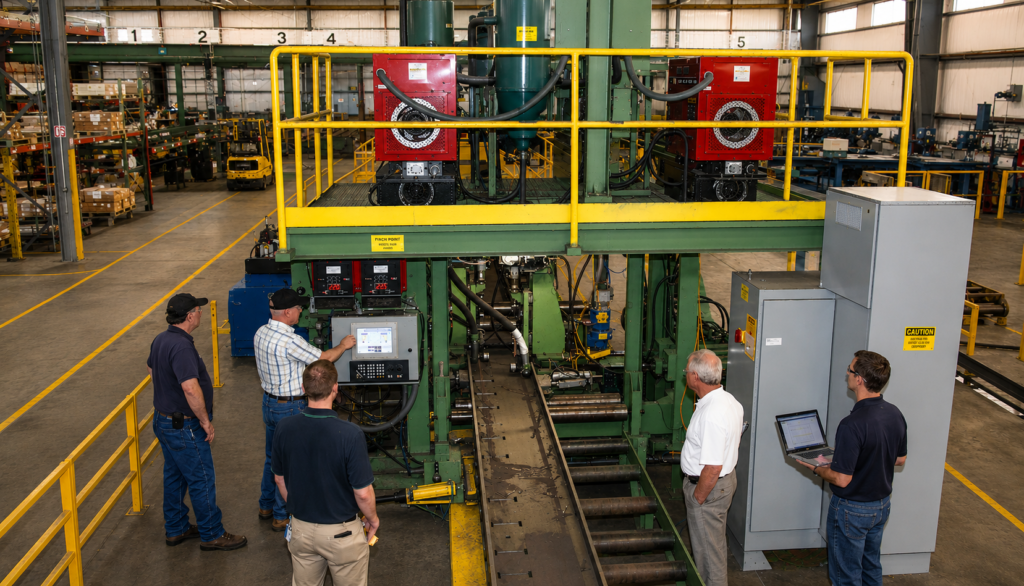
CSI designed and built the complete pull-through welder system — mechanical structure, motion control, hydraulics, and operator interface — as a fully integrated production machine. The system covers the full welding process from fit-up and tack through to the final weld pass, with optional web seaming.
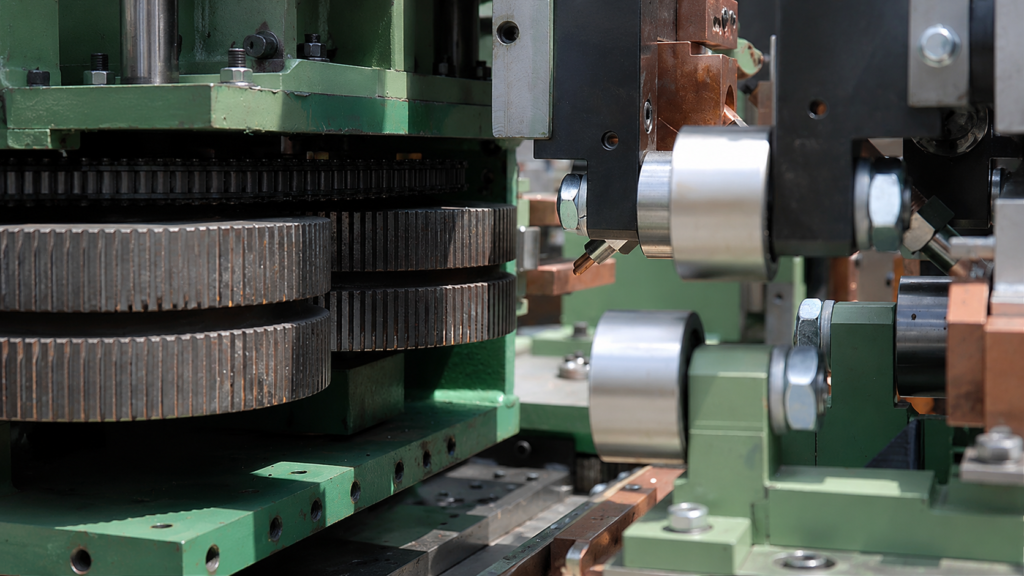
The pull-through station uses fully synchronized in-feed and out-feed conveyors running in lockstep with both weld head drive roller sets, eliminating the beam shimmy that causes distortion in conventional systems. Each weld head moves independently on two servo-controlled axes with non-contact digital seam tracking, so the system produces consistent individual seam welds even with material variation across the beam. Master and slave drive rollers ensure linear passage through the weld station, and variable hydraulic clamping locks flanges and web in place during the pass.
The optional fit-up and tack station uses magnetized flange alignment rollers and a web plate lift for fast setup, with localized clamping to ensure dimensional and structural integrity before the beam ever reaches the weld heads.
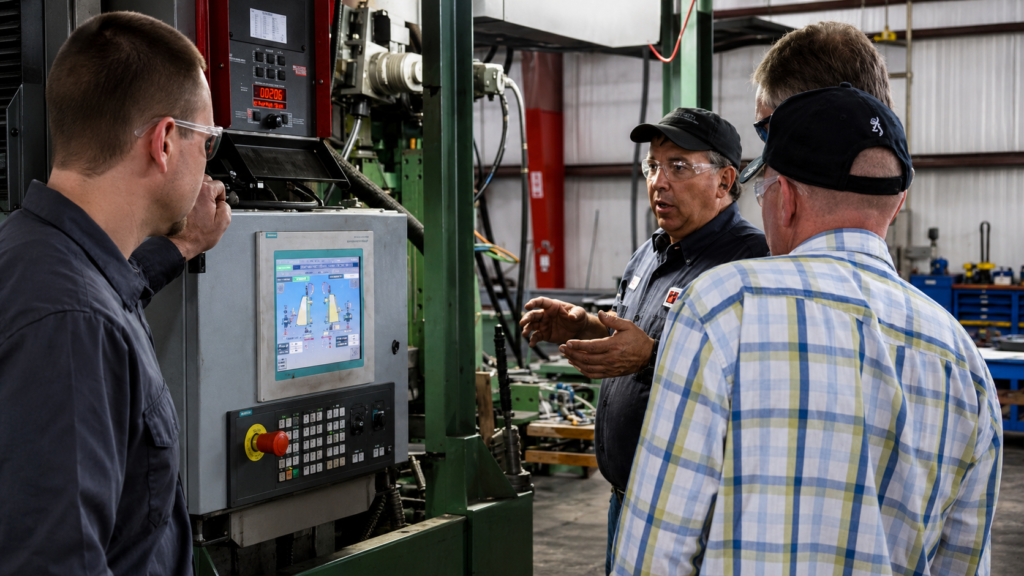
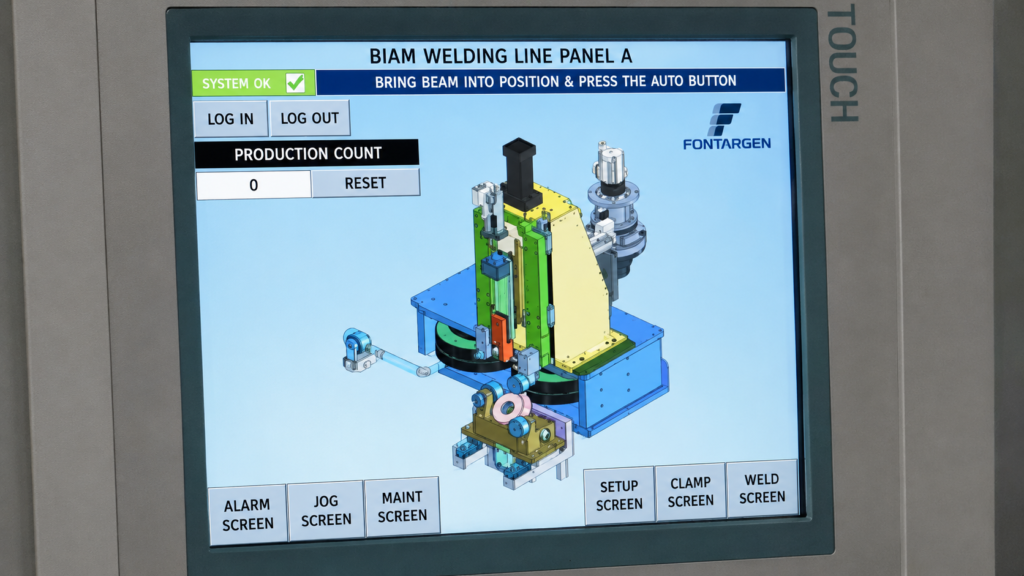
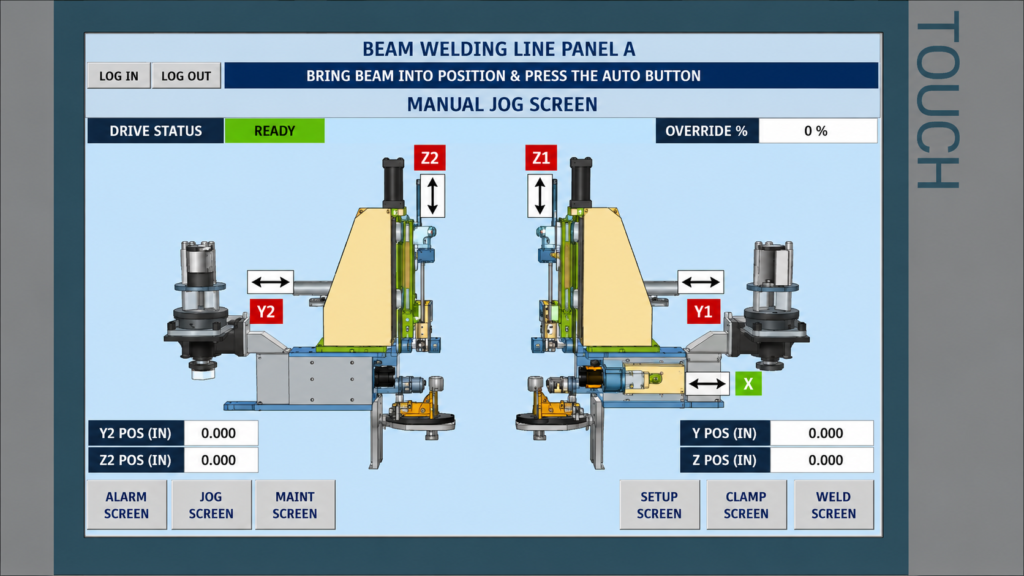
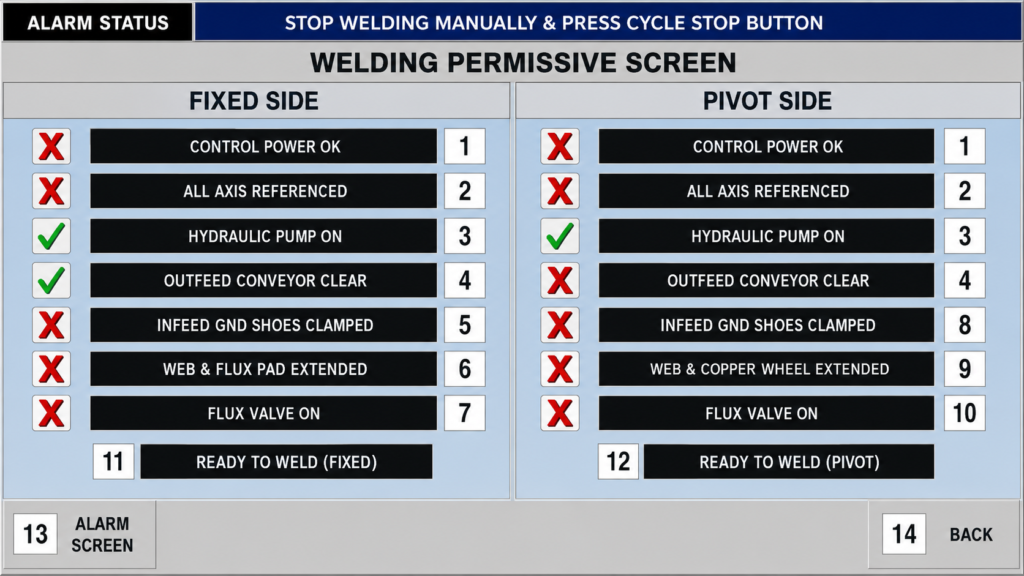
CSI developed all software in-house — PLC logic, motion control, and HMI screens — with the system designed around operator productivity. Recipe-driven weld and clamp setup stores up to 100 beam configurations for automatic loading, so operators switching between beam types spend time welding instead of re-configuring. The HMI provides descriptive status displays for fast troubleshooting, and all stations can operate in manual or automatic mode. Feed rate changes can be made on the fly with full drive and conveyor synchronization maintained, and the system includes a network connection for integration with existing plant control PLCs.
The entire machine is built on extremely rigid structural tube framing with heavy industry-grade ball screws, servos, and pneumatic components — designed to endure the harsh environment of a steel fabrication shop and deliver long service life with minimal maintenance.
The system meets construction and military transportation codes for dimensional and weld quality, and the recipe-driven operation with digital seam tracking delivers consistent welds across the full range of beam geometries — from 6-inch web heights to 72-inch, from straight beams to 15-degree tapers — with significantly reduced operator dependence and setup time.
The pull-through welder wasn’t a one-off project — CSI has continued to refine and improve the original design over the years, incorporating feedback from production environments and advancing the controls platform as Siemens technology has evolved. The machine remains an active part of CSI’s product line, with units continuing to be sold to structural steel fabricators.
Stored beam recipes
Maximum weld speed
Servo-controlled axes
Tell us about your project, and we’ll walk you through how we’d approach it