114 Skillets, One Network: Wireless Controls Retrofit for an Automotive Assembly Line
How CSI has delivered three phases of skillet controls upgrades at a major North American automotive final assembly plant — replacing legacy “black box” controllers with a modular, diagnosable Siemens platform across 114 skillets and four trim lines, with zero production downtime during retrofit.
Industry
Automotive
Service
Migrations & Retrofits
Platform
Siemens S7-1500
Skillets
114
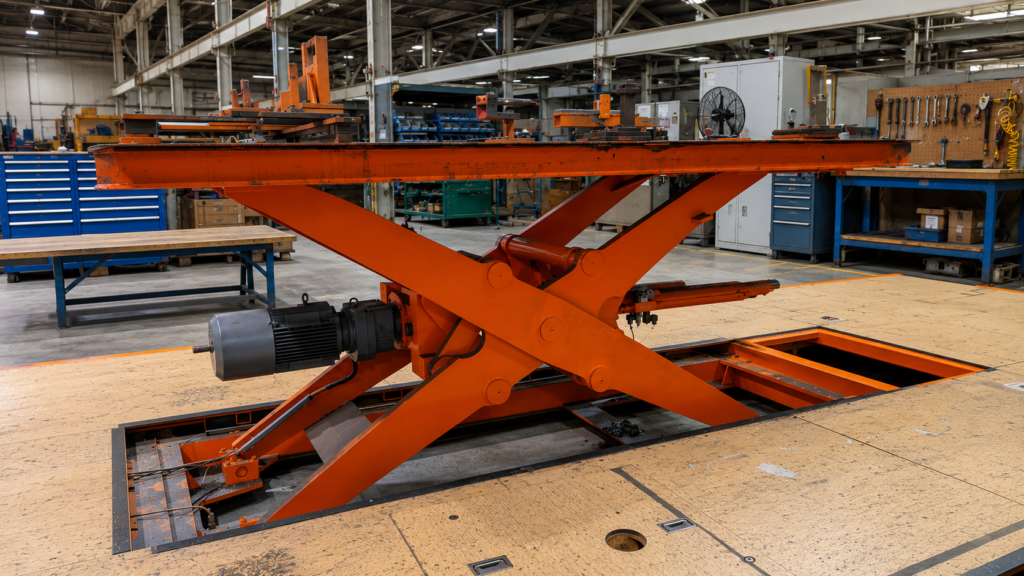
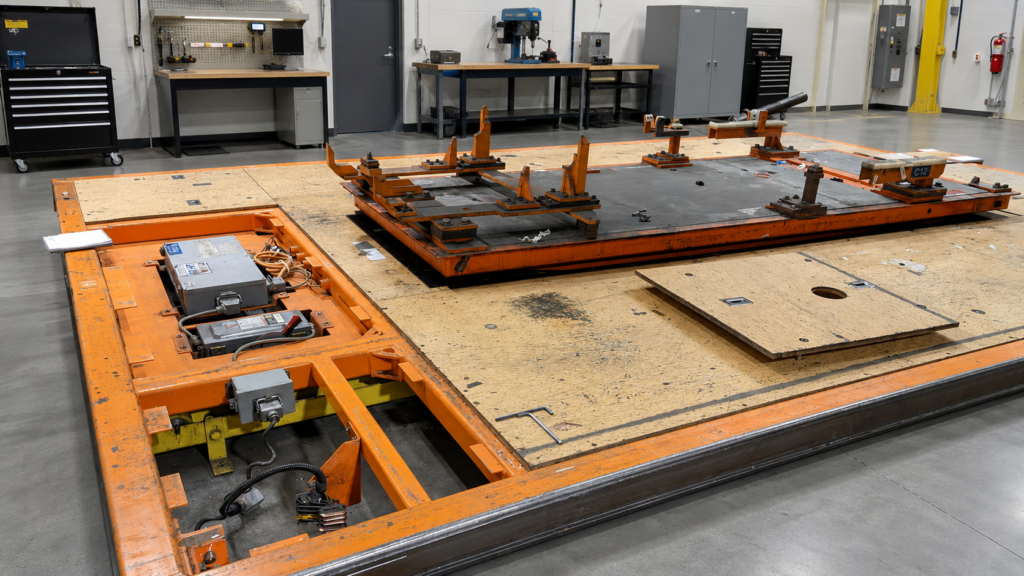
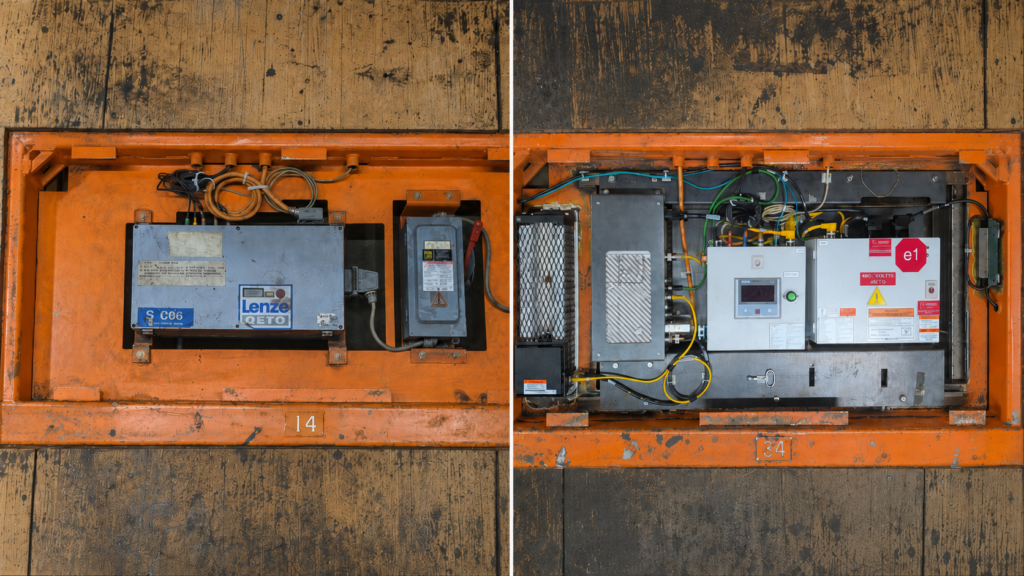
A major North American automotive OEM was operating 114 skillets across four trim lines and a mezzanine line at a final assembly plant building two of its highest-volume vehicle models. Each skillet — a mobile platform that carries vehicle bodies through the trim process, raising and lowering them to ergonomic working height at each station — was controlled by legacy hardware that had become a “black box.” When something went wrong, diagnosing the issue was slow and difficult, driving up maintenance costs and in-line stoppages. The customer needed a full controls retrofit that replaced every legacy controller with a uniform, modular system where components could be swapped quickly, diagnostics were comprehensive, and data collection was built in from the start. And because this was a retrofit on an existing running production plant — not a new build — zero downtime was mandatory.
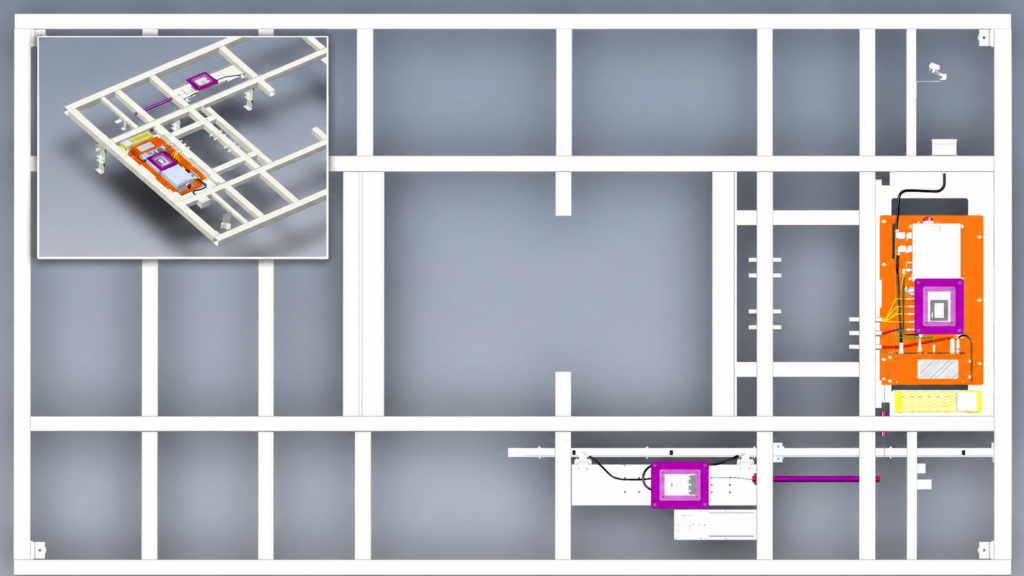
CSI delivered the complete controls retrofit across all 114 skillets and four trim lines. Each skillet received a new Siemens 1512SP F-PLC with safety capability, a Sinamics G120D drive for lift motor control, a PROFINET rope encoder for height positioning, an IR display for real-time feedback, and a manual pushbutton control box — all replacing the legacy LJU control units while reusing existing limit switches, pressure switches, proximity sensors, and field cabling.
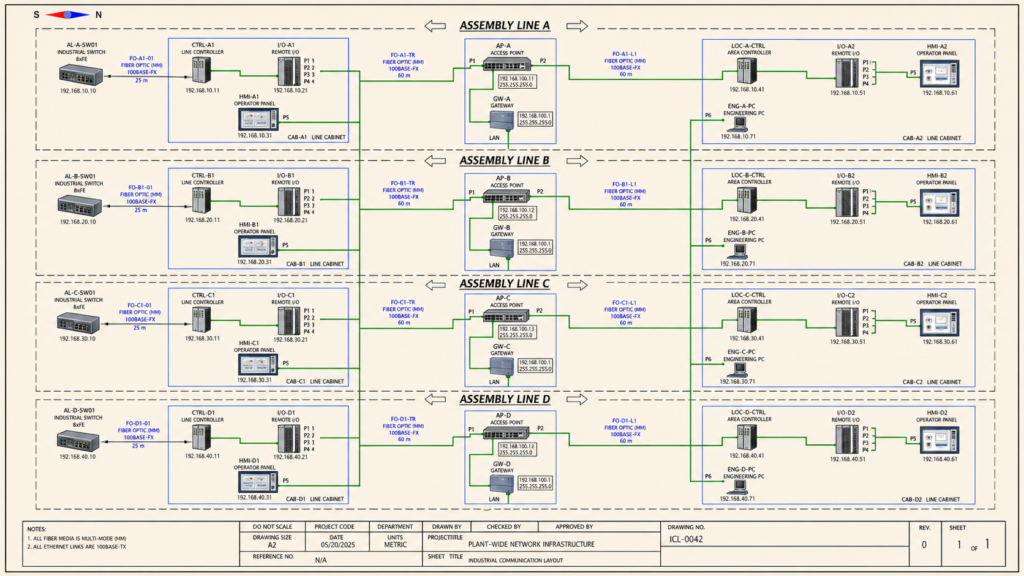
The wired communication network was replaced entirely with a wireless R-Coax PROFINET system spanning all four trim lines, with wireless access points and managed network switches configured to provide reliable high-throughput communication to every skillet in motion.
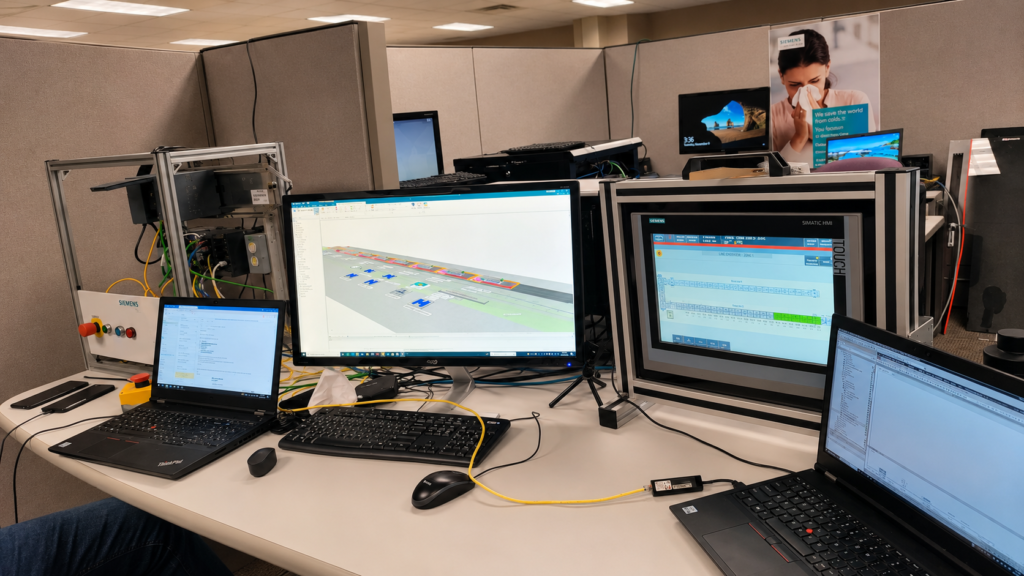
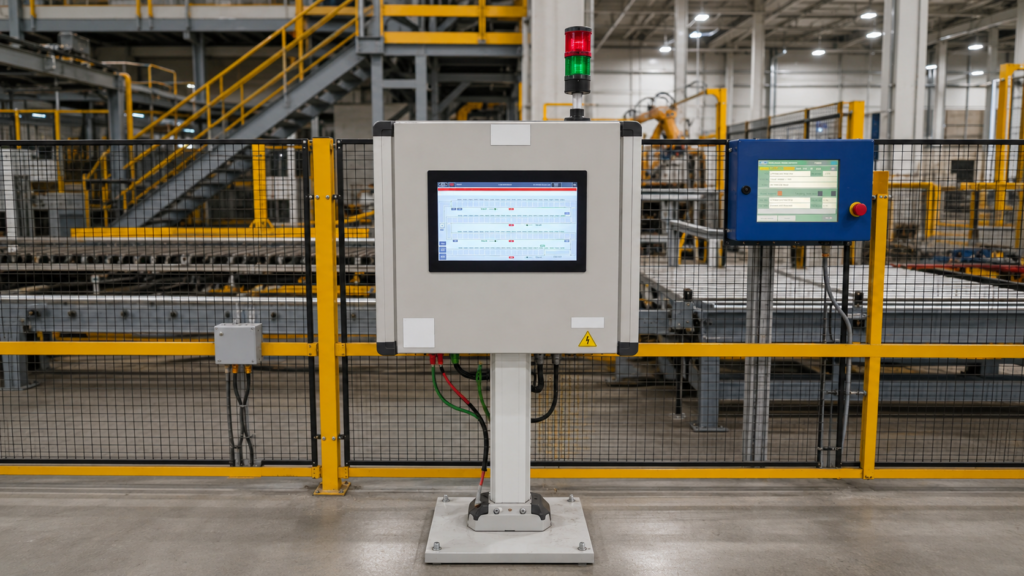
At the line level, CSI supplied four Siemens 1518 traffic controller PLCs with 15-inch Comfort HMIs — one per trim line — to manage skillet coordination, height recipe distribution, error proofing, and safety pull cord integration. Gateway modules bridge the PROFINET skillet network to the existing Rockwell Ethernet/IP infrastructure on each trim line. A dedicated maintenance and test panel on the mezzanine allows technicians to independently test and diagnose skillet functions in the repair spur.
CSI has delivered the skillet controls upgrade across three project phases — 2021, 2024, and an ongoing 2026 phase — each building on the work and lessons of the previous one. The execution required massive coordination between multiple parties: CSI’s engineering and commissioning team, third-party electrical contractors, plant safety teams, and the customer’s production and maintenance staff. Every installation had to be planned and executed without disrupting production on the active assembly lines.
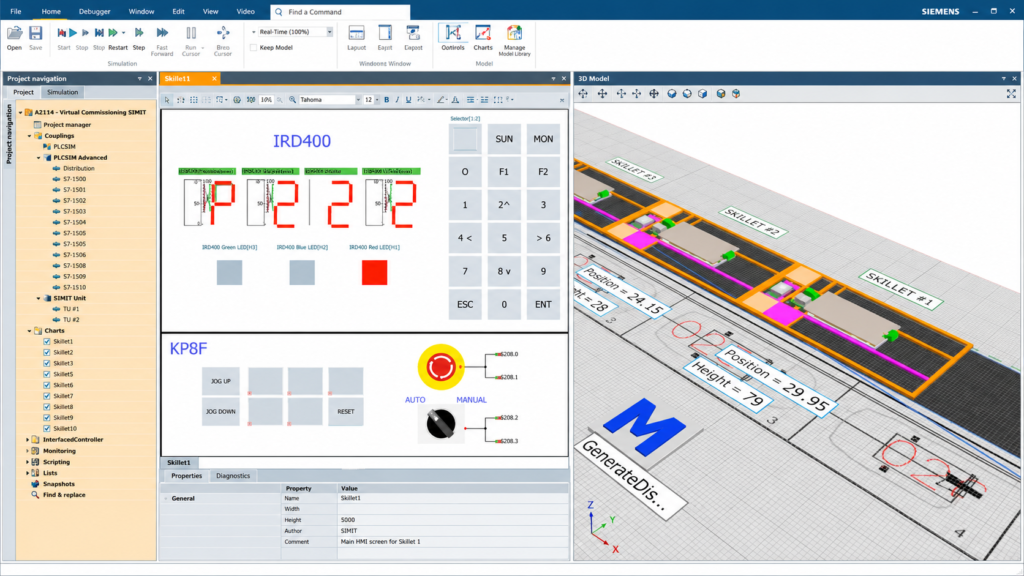
CSI used extensive simulation testing before any equipment reached the plant floor — PLC Sim Advanced testing of skillet logic, hardware-in-the-loop testing of the traffic controllers, communication validation through the gateway modules, and a full SIMIT behavioral model of the system. The initial phase proved the system on a small batch of skillets with fallback capability to the old controllers, before rolling out across all 114 units. CSI provided five days of hands-on training for the customer’s maintenance and controls staff covering electrical, software, and operational aspects of the new system.
The upgrade has delivered significant improvements to line efficiency and a measurable reduction in in-line stoppages. Maintenance costs have decreased thanks to the modular, swap-friendly hardware design and high cross-line compatibility — a component from one trim line works on any other. The comprehensive diagnostics built into the new system replaced the old “black box” approach, giving maintenance staff the ability to identify and resolve issues in minutes rather than hours.
Project phases (2021–2026)
Skillets retrofitted
Production downtime
Tell us about your project, and we’ll walk you through how we’d approach it