Full Line Retrofit: Multi-Platform Controls Migration for a Steel Pickling Operation

How CSI replaced legacy Reliance drives and Rockwell PLCs with a modern Siemens S120 drive system and safety PLC on an active steel pickling line — delivering improved diagnostics, regenerative energy savings, and enhanced safety architecture within a two-week shutdown window.

Industry

Metals

Service

Migrations & Retrofits

Platform

Siemens S7-1517F / S120

Line

Pro/Eco Pickling Line


Warning: Trying to access array offset on null in /home/u454289782/domains/csinnovation.com/public_html/wp-content/plugins/elementor/includes/widgets/video.php on line 1203

The Challenge

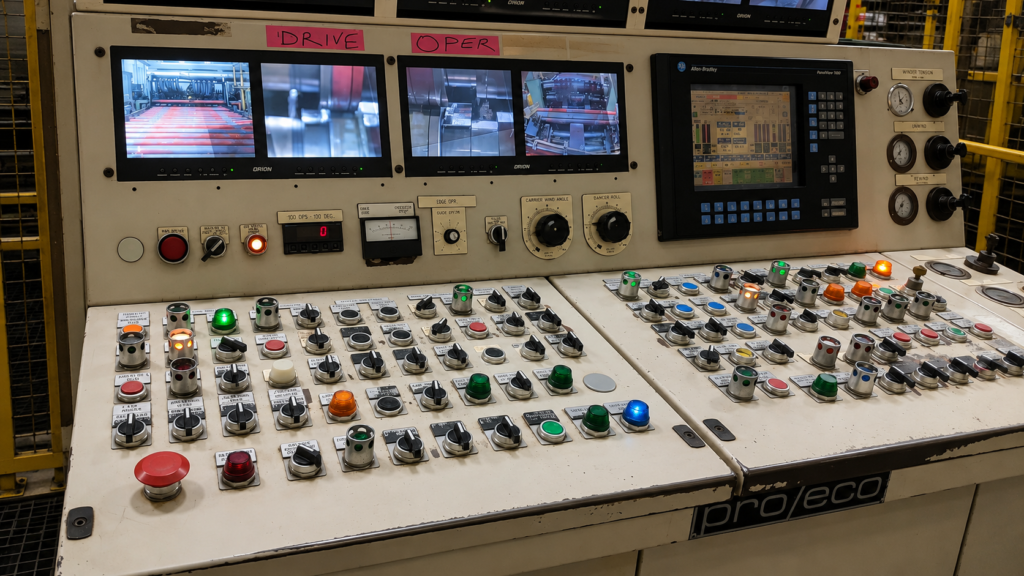
A steel processing facility in southern Ontario was running a pickling line with legacy Reliance drives controlling an unwinding and rewinding application, as well as in-line slitting. The line was controlled by a Reliance PLC with Rockwell I/O racks and HMIs throughout the line. The drives and processor had reached end of life, spare parts were becoming difficult to source, and the existing safety architecture used basic E-stop circuits without individual device diagnostics. The legacy PLC provided no diagnostic capabilities and became increasingly difficult for maintenance staff to support the line operation. The maintenance staff had lost the ability to connect to the Reliance drive system, which made it impossible to troubleshoot any drive faults. The line’s wet section ran on a separate Rockwell PLC that needed to be preserved, so any retrofit had to bridge the new Siemens platform to the existing Rockwell infrastructure without disrupting that portion of the process.

The Solution

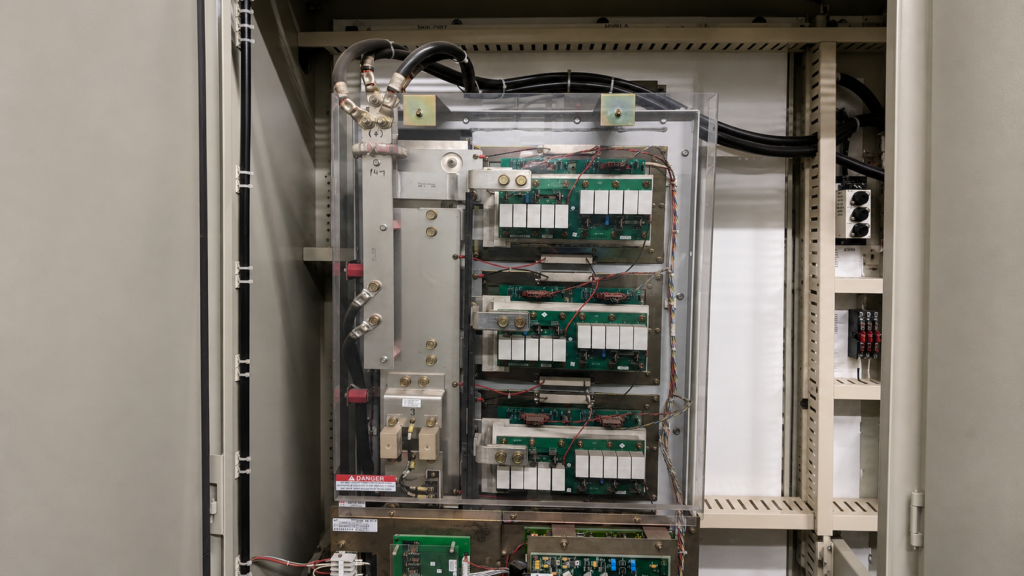
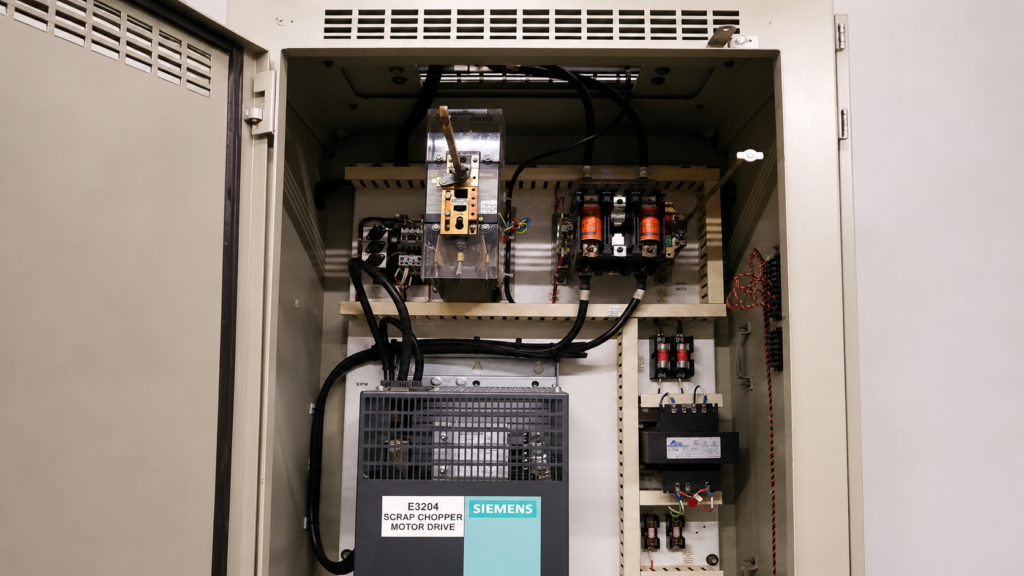
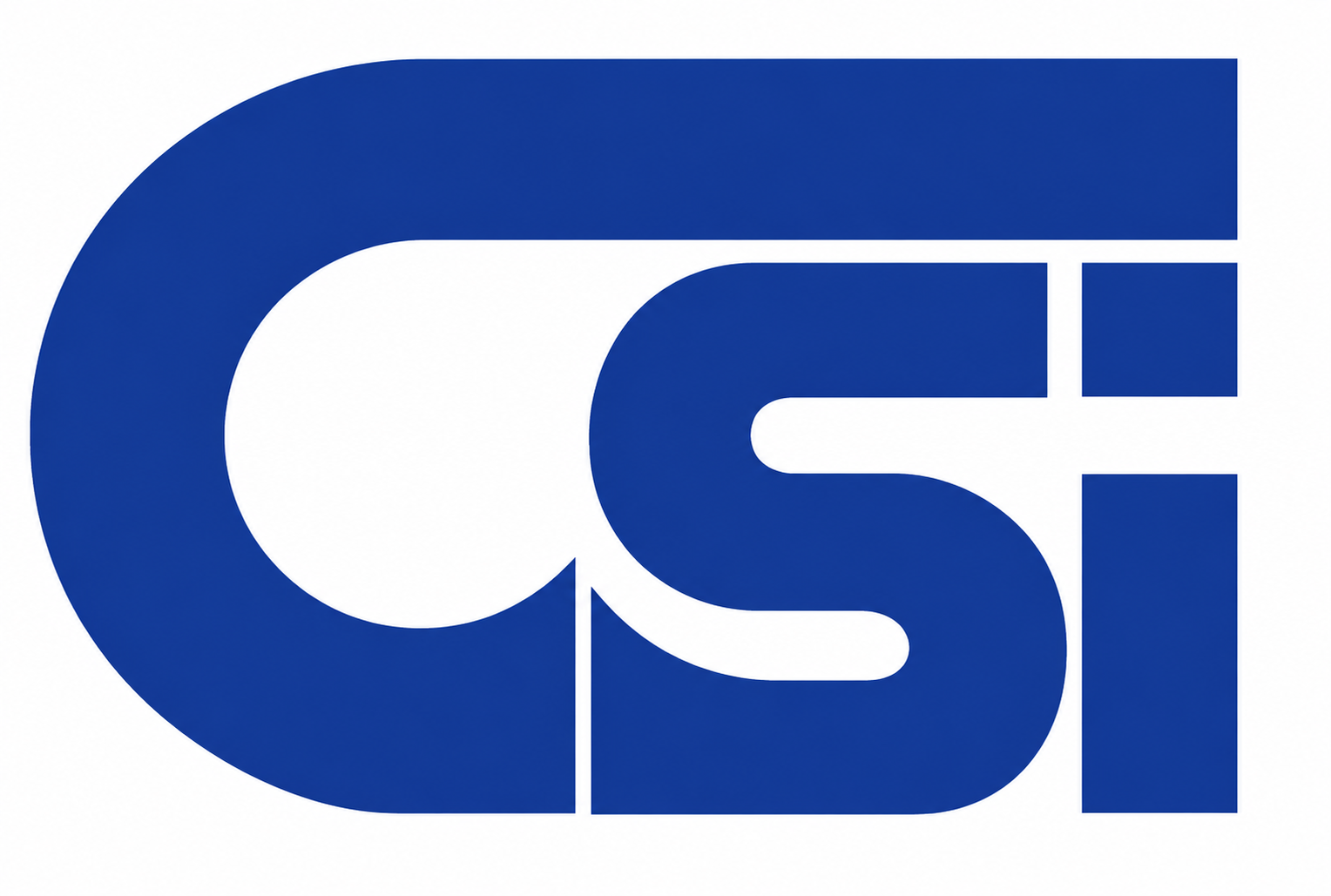
CSI replaced the entire drive and control layer with a modern Siemens platform. Four S120 servo drives replaced the legacy Reliance units for the flattener/unwinder (260A), slitter (210A), scrap chopper (210A), and recoiler/rewinder (490A), all fed by a new 630kW Smart Line Module with regenerative capability — eliminating the existing braking resistors and recovering energy back to the line during deceleration.

A new Siemens 1517F safety PLC replaced the Reliance processor rack, with PROFINET-based ET200SP and ET200MP remote I/O racks replacing all existing Rockwell I/O modules across six rack locations. The existing resolvers on all line motors were replaced with Siemens DRIVE-CLiQ encoders providing 24-bit resolution for precise closed-loop speed and position control. A Prosoft gateway module bridges the new Siemens PROFINET network to the wet section’s existing Rockwell PLC, preserving that system’s operation without modification.

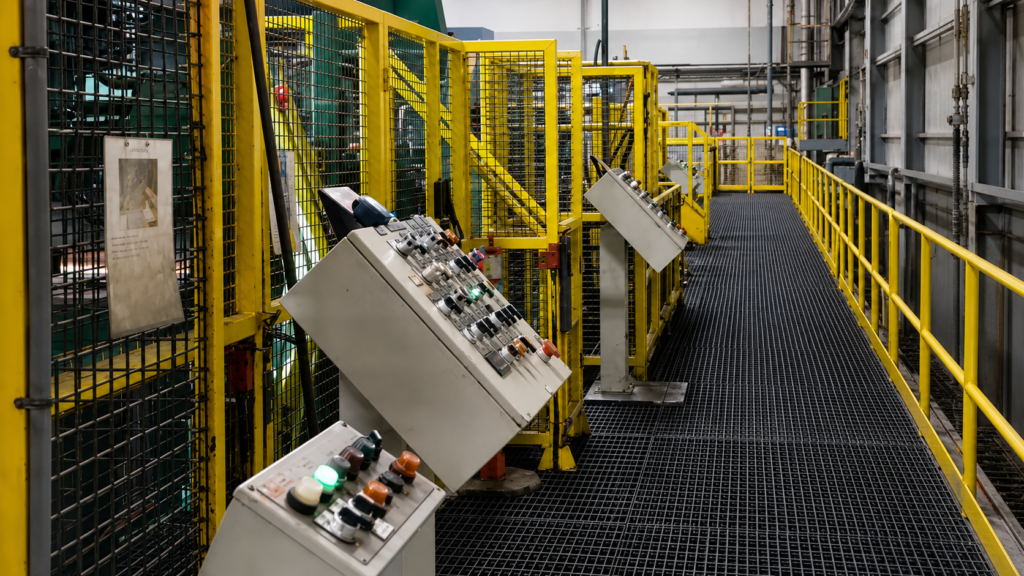
Every E-stop and C-stop pushbutton was replaced with two-channel safety-rated equivalents wired individually to Siemens safety I/O cards — giving maintenance staff per-device diagnostic visibility on the HMI, so they can see exactly which button or device triggered a fault. Two new Siemens Comfort HMI panels — a 19-inch main operator station and a 9-inch front-of-line station — replaced the existing Rockwell HMIs with screens designed to match the look and feel of the original interface.

Key Components

  • Siemens 1517F safety PLC (TIA Portal)
  • 4× Sinamics S120 servo drives
  • 630kW Smart Line Module with regeneration
  • 9× DRIVE-CLiQ encoders (24-bit)
  • 6× PROFINET remote I/O racks (ET200SP/MP)
  • 19″ + 9″ Siemens Comfort HMI panels
  • Prosoft gateway to existing Rockwell wet section PLC
  • Two-channel safety E-stop/C-stop architecture

Project Execution

CSI’s approach prioritized a seamless transition for both operators and maintenance staff. Before the shutdown window, the team conducted extensive on-site data collection — recording every I/O mapping, sequence behavior, drive parameter, and process variable from the existing system to serve as the baseline for the new controls. All PLC logic, HMI screens, and drive configurations were developed and tested at CSI’s facility through a factory acceptance test that included PLC simulation, HMI validation, and drive motion testing with customer-supplied motors and encoders.

Installation and commissioning were completed within a two-week shutdown window — two to three days for demolition of old equipment and installation of new components, followed by 10 to 12 days of multi-shift commissioning with multiple engineers on-site. CSI’s goal throughout was to make the line run identically to its current operation — same operator workflows, same pushbutton behavior, same sequence of operation — so that operators and maintenance staff could resume production without a steep learning curve. Two days of dedicated training covered electrical, software, and operational aspects of the new system, with an additional week of two-shift production support after commissioning.

During commissioning, CSI’s engineers identified two separate issues with the drive system before they became costly production outages. During motor tuning, the advanced Siemens drives detected abnormal resistance measurements on the scrap chopper motor. This led the electricians to perform a mega-ohm meter test of the motor windings, ultimately catching the early stages of an insulation breakdown. The motor was removed for rebuild and a spare installed so commissioning could continue without delay. These are the kinds of issues that would have gone undetected with the legacy Reliance system — only surfacing later as an unexpected failure during production.
The Results

The retrofit replaced the entire drive and control layer while preserving the existing mechanical infrastructure, motors, field wiring, and wet section PLC. The regenerative Smart Line Module eliminated braking resistors and recovers energy during deceleration, and the two-channel safety architecture with per-device diagnostics gives maintenance staff visibility they never had with the legacy system.

4

Drives retrofitted

2 weeks

Shutdown to production

24-bit

Encoder resolution upgrade

Have a similar challenge?

Tell us about your project, and we’ll walk you through how we’d approach it